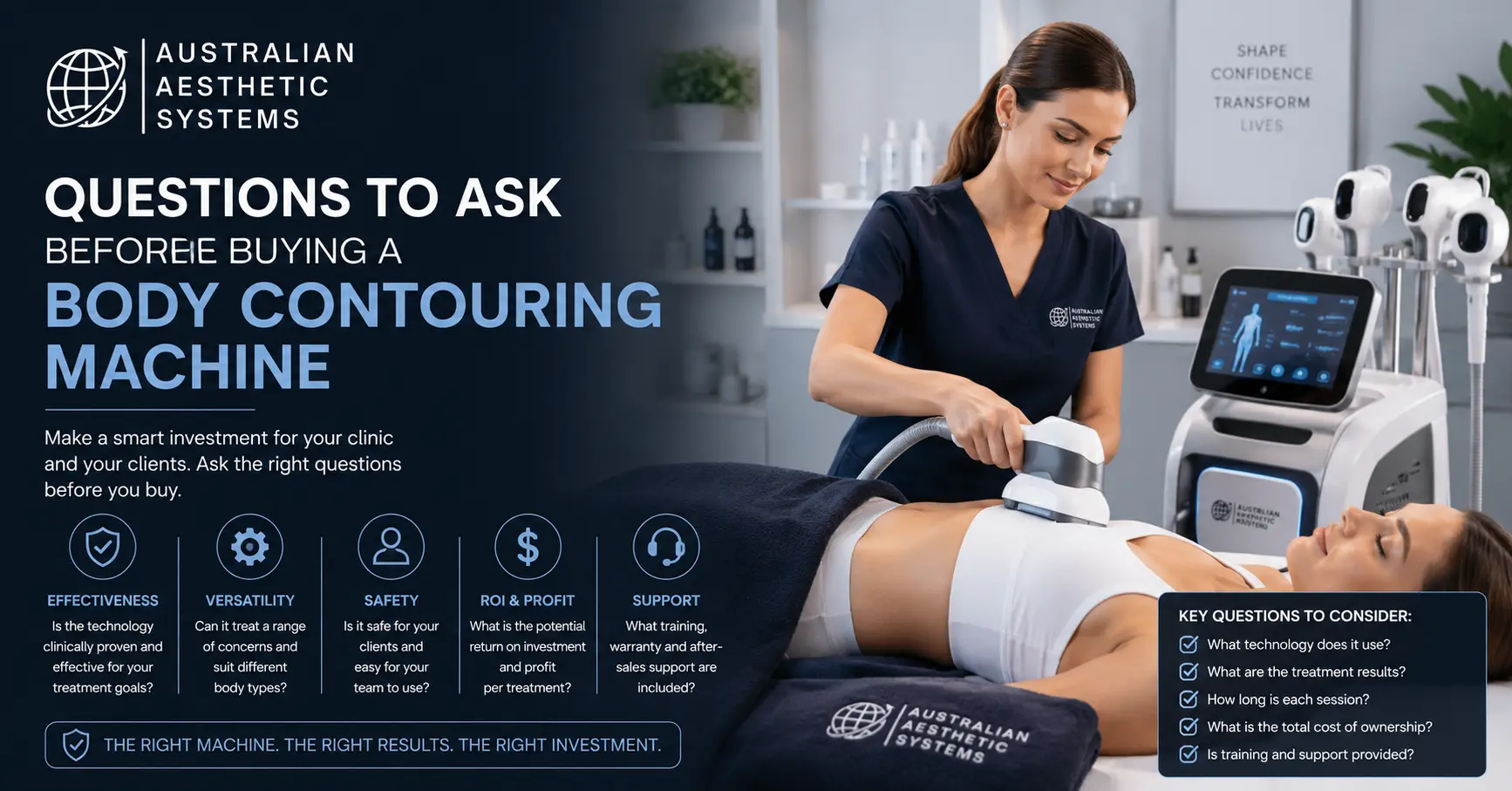
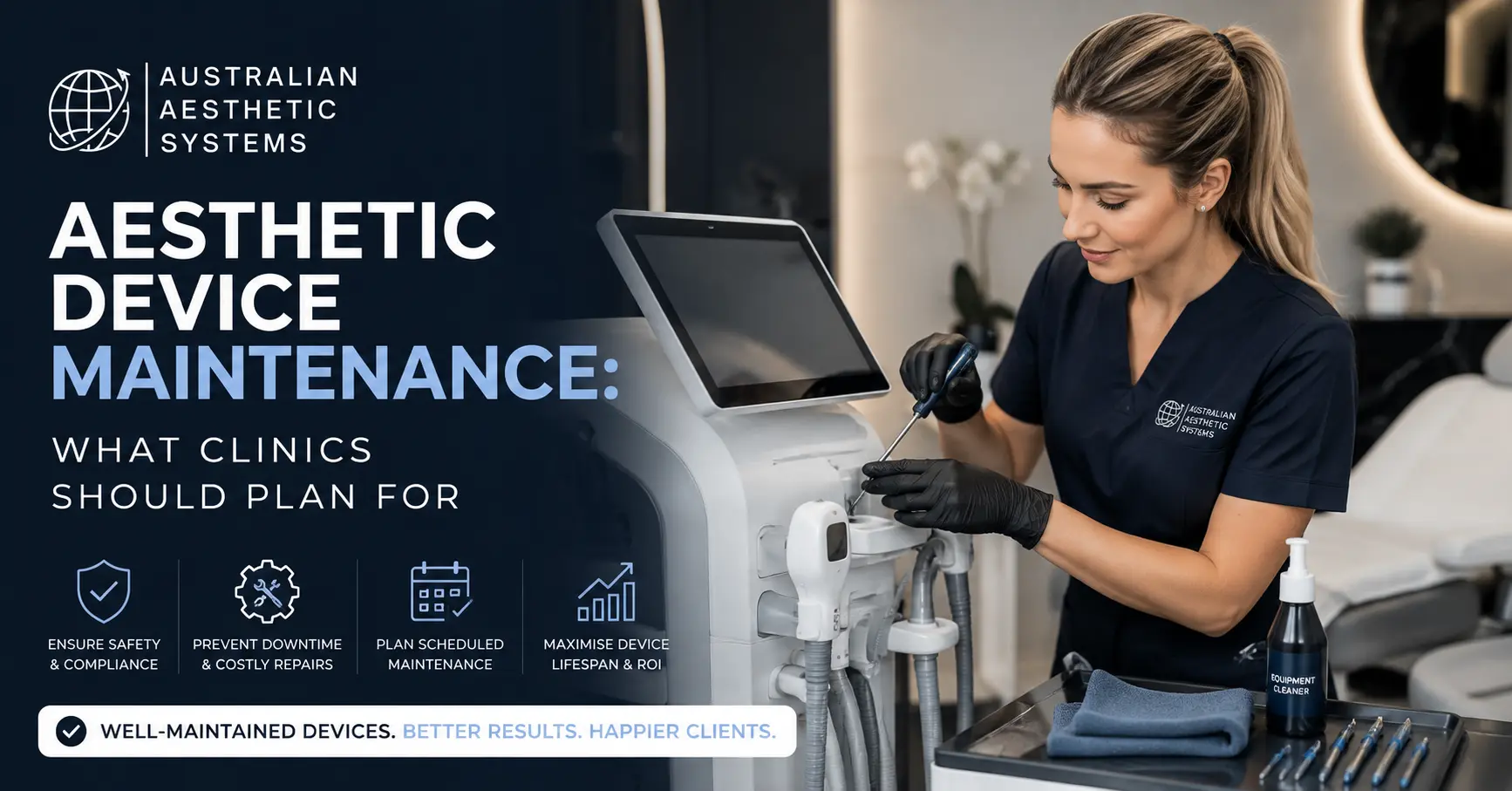
Buying an aesthetic device is a serious investment, and most clinics do their homework on the technology itself before signing off. Fewer clinics spend the same amount of time thinking about what happens after the device arrives. Maintenance, consumables, servicing schedules and spare parts rarely make it into the initial conversation, yet they are exactly what determines whether a machine keeps performing well for years or starts causing headaches within twelve months.
This guide walks through what clinics should actually plan for once a device is on the treatment room floor, so you can budget properly, avoid unexpected downtime and get the full working life out of your equipment.
Why Maintenance Planning Matters More Than It Seems
An aesthetic machine is not a set-and-forget purchase. These are precision devices delivering energy, light or suction with a level of consistency that clients and practitioners both rely on. When maintenance is neglected, the first sign is usually a gradual drop in treatment quality before anything actually breaks, which means clinics can be delivering underpowered or inconsistent treatments for months without realising it.
Planning for maintenance from day one also protects the financial side of the investment. A device that is properly serviced and cared for holds its clinical performance and resale value far better than one that has been run without a maintenance routine in place.
Consumables: The Ongoing Cost Clinics Forget to Budget For
Almost every aesthetic device relies on some form of consumable to keep it running, whether that is treatment tips, cartridges, gel, filters or disposable accessories. These are often left out of the initial budget conversation, which can catch clinics off guard once the device is in regular use.
Before committing to a machine, it is worth asking exactly what consumables it requires, how often they need replacing, and what that costs across a typical month of bookings. Devices used heavily for treatments like HIFU or body contouring can go through cartridges or tips at a noticeably faster rate than a lower frequency device, so this figure genuinely affects the profitability of the service you are offering.
Keeping a small buffer stock on hand is one of the simplest ways to avoid a cancelled appointment because a filter or tip has run out mid-week. Browsing the consumables range regularly and reordering ahead of time, rather than waiting until stock is nearly gone, keeps this from ever becoming a scheduling problem.
Handpieces Need Their Own Care Routine
Handpieces are usually the most heavily used and most expensive component of an aesthetic device, and they tend to wear faster than the base unit itself. Cartridges, applicators and treatment heads are precision engineered, and how they are cleaned, stored and handled between treatments has a direct effect on how long they last.
A few habits that genuinely extend handpiece life:
- Clean handpieces exactly as instructed in the device manual, since incorrect cleaning agents can damage sensitive components over time.
- Store handpieces in their designated case or holder rather than left loose on a treatment trolley, where they are more likely to be knocked or dropped.
- Avoid excessive cable strain by coiling leads properly rather than pulling them taut across the room.
- Log handpiece use where practical, particularly for devices with a rated number of shots or a cartridge lifespan, so replacement is planned rather than a surprise mid-treatment.
Treating handpieces as a consumable with a lifespan, rather than a permanent part of the machine, tends to shift the mindset in a clinic toward proactive replacement instead of running a handpiece until it fails.
Building a Servicing Schedule
Regular servicing is where most of the difference between a machine that lasts and one that does not gets made. Aesthetic devices generally need a combination of routine checks a clinic can do in-house and periodic professional servicing carried out by a qualified technician.
In-house checks typically cover things like cleaning external surfaces, checking cables and connections for wear, confirming screens and controls are responding correctly, and noting any unusual sounds or performance changes during treatment. These take only a few minutes but catch small issues before they become bigger ones.
Professional servicing goes deeper, covering calibration, internal component checks and confirming the device is still performing within its intended specifications. This matters clinically as well as commercially, since a machine that has drifted out of calibration may still appear to work normally while actually delivering less effective treatments.
Setting a servicing schedule at the time of purchase, rather than waiting for a problem to show up, is one of the simplest ways to protect both the device and the results your clinic is known for.
Spare Parts and Why Lead Time Matters
Even well maintained machines occasionally need a part replaced, and the availability of that part can be the difference between a short pause and weeks of downtime. This is one of the most overlooked factors when clinics choose a supplier, since it rarely comes up until something actually breaks.
A few questions worth asking before purchase, and revisiting periodically afterward:
- Are spare parts held locally in Australia, or does a replacement need to be shipped from overseas?
- What is the typical turnaround time for a part that is not in stock?
- Is there a loan or backup unit option available for clinics that cannot afford extended downtime?
Working with a supplier that holds local stock and understands the urgency of a broken device in an active clinic makes a measurable difference to how quickly a problem gets resolved.
Staff Training Is Part of Maintenance, Not Separate From It
A significant portion of device wear and unnecessary faults comes down to how the equipment is actually used day to day, not just how it is serviced. Staff who are properly trained on a device tend to handle it more carefully, follow correct settings, and are quicker to notice when something feels off before it turns into a bigger issue.
Training also matters when staff change over. A machine that was set up correctly with the original team can quickly develop bad habits once new staff are using it without a proper handover. Building refresher training into your onboarding process, rather than relying on informal shadowing, keeps this consistent.
Our training programs cover both clinical application and correct day to day handling of the equipment, which supports the device’s performance as much as it supports treatment quality and client outcomes.
Building a Maintenance Plan From the Start
The clinics that get the most out of their aesthetic devices tend to treat maintenance as part of the purchase decision, not an afterthought once something goes wrong. That means understanding consumable costs before buying, setting a servicing calendar from day one, knowing what spare parts availability looks like, and making sure every staff member using the device has been properly trained on it.
If you are researching a new device or want to review the maintenance plan on equipment you already own, browse our devices range to see what local support and consumables are available for each model, or get in touch through our contact page to speak with our team about a servicing and support plan tailored to your clinic.
FAQ
How often should aesthetic devices be professionally serviced?
This varies by device and how frequently it is used, but most manufacturers recommend a professional service at least once a year, with more frequent checks for high-use devices such as HIFU or body contouring systems.
What consumables do aesthetic devices typically need?
Common consumables include treatment tips, cartridges, gels, filters and disposable accessories, with the type and frequency depending on the device and how often it is booked for treatments.
How long do handpieces usually last?
Handpiece lifespan varies significantly by device and usage, ranging from a set number of rated shots on some cartridges through to several years of use on more durable applicators, which is why checking manufacturer guidance is important.
What should clinics check before buying a new device?
Beyond the clinical results, it is worth confirming consumable costs, servicing requirements, local spare parts availability and what training is included, since these all affect the real cost of ownership.
Does staff training actually affect how long equipment lasts?
Yes. Properly trained staff tend to handle devices more carefully, follow correct settings and catch early warning signs, which reduces avoidable wear and unnecessary faults over time.
What happens if a device breaks down and a part is not in stock?
This depends on the supplier’s local stock holding and turnaround time, which is why it is worth confirming spare parts availability and any loan unit options before purchasing, rather than after a breakdown occurs.