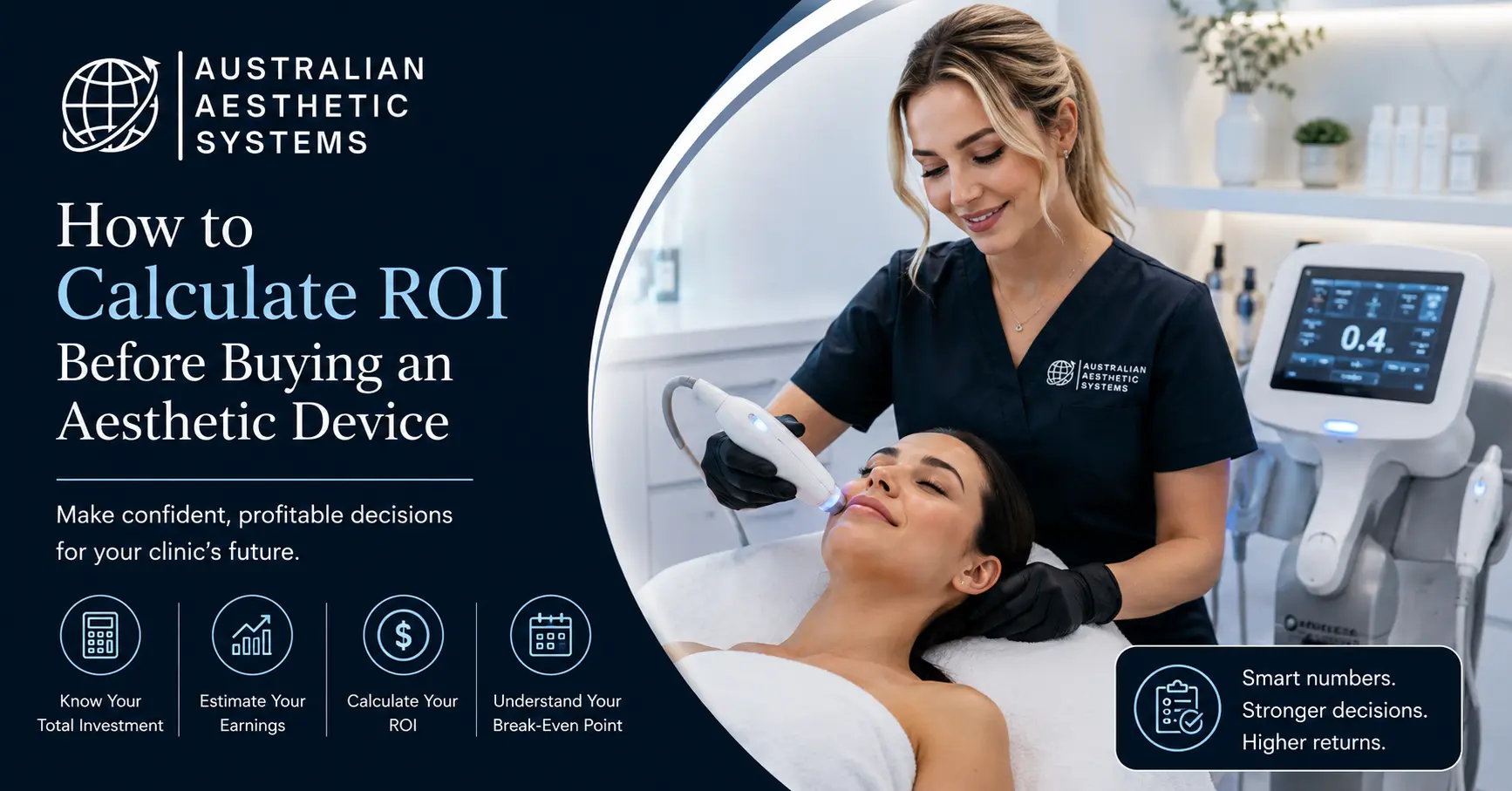
An aesthetic device is one of the biggest single purchases most clinics make, and it is tempting to base the decision on how impressive the technology looks in a demo. The clinics that actually make money from a new device are the ones that ran the numbers first. Here is a practical way to work out aesthetic device ROI before you sign anything, including a breakeven worksheet you can fill in with your own figures.
Why ROI Matters More Than the Sales Pitch
Every device supplier can show you glowing before and after photos, and most of the technology on the market genuinely works when used correctly. The real question is not whether a device produces results. It is whether it produces results at a price point and volume that actually pays for itself in your specific clinic. A device that is perfect for a busy CBD clinic doing forty treatments a week can be a slow-moving asset in a quieter regional practice, and vice versa.
Working through the numbers before you buy turns a big, emotional purchase into a calculated business decision, which also makes it much easier to compare devices in our devices range against each other on a like-for-like basis.
The Real Cost of an Aesthetic Device
The purchase price is only the starting point. A full and honest cost picture includes:
- Purchase price or finance repayments: the upfront cost or the ongoing monthly commitment if the device is financed.
- Consumables: many devices rely on tips, cartridges, gels or other per-treatment products. Check our consumables range for typical ongoing costs before you commit to a device.
- Staff time: a treatment that takes 90 minutes ties up a room and a staff member for much longer than one that takes 20 minutes, which changes how many appointments you can realistically run per week.
- Training: a device is only as profitable as the staff member operating it. Factor in the cost and time of proper training through a program like our training courses.
- Servicing and downtime: factor in periodic servicing and the lost revenue from any downtime while a device is serviced or repaired.
The Key Variables in Your ROI Calculation
Once you have an honest cost picture, ROI comes down to four core variables working together.
- Price per treatment: what you can realistically charge in your local market, not what a supplier’s marketing material suggests clinics elsewhere are charging.
- Consumable and product cost per treatment: the direct cost that comes out of every single booking, regardless of volume.
- Appointment volume: how many treatments you can genuinely book per week once the device is up and running, accounting for marketing time and client acquisition, not just theoretical capacity.
- Breakeven point: the number of treatments needed before the device has paid for itself and starts generating pure profit.
Your Breakeven Worksheet
Fill in your own numbers in the middle column using a real quote from a supplier and your own clinic pricing. The example column shows how the maths works using a mid-range device as a reference point.
| Worksheet Input | Your Number | Example |
| Device purchase price (or deposit if financed) | $ | $25,000 |
| Monthly finance repayment (if applicable) | $ | $650 |
| Consumable or product cost per treatment | $ | $15 |
| Staff time cost per treatment (wage ÷ treatments per hour) | $ | $20 |
| Price charged per treatment | $ | $250 |
| Gross profit per treatment (price minus consumables minus staff time) | $ | $215 |
| Treatments needed per month to cover repayments | ~3 | |
| Treatments needed in total to cover full purchase price | ~116 |
The formula behind the worksheet is straightforward. Gross profit per treatment equals the price charged minus consumables minus staff time cost. Divide the device cost, or the deposit and setup cost if financed, by the gross profit per treatment to get the total number of treatments needed to fully pay off the device. Divide the monthly repayment by the gross profit per treatment to see how many bookings a month simply cover the finance, before any of it becomes profit.
Worked Example: Is the Device Worth It?
Using the example numbers above, a $25,000 device with $215 gross profit per treatment needs around 116 treatments to be fully paid off. If a clinic can realistically book 6 treatments a week for this service, that is roughly 19 to 20 weeks, or under five months, to recover the full cost of the device. Every treatment after that point is largely profit, aside from ongoing servicing and consumables.
This is where appointment volume becomes the single most important variable in the whole calculation. Doubling your weekly bookings roughly halves your time to breakeven, which is why device categories with strong existing demand, such as our acne and congestion management devices or skin rejuvenation systems, often deliver faster ROI simply because clinics can fill the appointment book more easily from day one.
Look Beyond Breakeven
Breakeven is the minimum bar, not the goal. A device with genuinely strong ROI usually has a few things going for it beyond the raw numbers.
- It supports package pricing, so clients prepay for a course of treatments and improve your cash flow upfront.
- It creates a natural upsell into other services, lifting average client spend beyond the single treatment price.
- It attracts new clients who were not previously part of your client base, rather than just shifting existing clients between services.
- It has genuine versatility. Multi-application platforms such as facial contouring and body contouring systems often justify a higher price tag because one machine covers multiple revenue streams rather than a single treatment type.
Questions Worth Asking Before You Sign
- What does the device actually cost to run per treatment, including consumables that are easy to forget when comparing quotes?
- Is the device TGA compliant for the treatments you intend to offer in Australia?
- What training is included, and is it enough to get a new staff member confidently running the device solo?
- What is the realistic appointment volume in your local market, based on population, competition and existing demand?
- What after-sales support and servicing is available locally, rather than relying on an overseas supplier for parts or repairs?
If you are weighing up more than one option, it is worth working through this worksheet for each device you are considering rather than relying on a single quote in isolation.
Financing and Cash Flow Considerations
Financing a device rather than paying upfront changes the ROI conversation slightly, since your breakeven point becomes about covering the monthly repayment rather than the full purchase price. This can make a higher-end device accessible sooner, provided the appointment volume genuinely supports the repayments each month. Ask about finance options as part of your initial enquiry so the numbers you are working with reflect your actual purchase structure.
Talk It Through Before You Commit
The worksheet above gives you a solid starting point, but every clinic’s numbers look a little different once you factor in local pricing, client base and existing treatment menu. Our team can talk through realistic appointment volume and consumable costs for the specific device you are considering as part of a consultation or demo request, so you are working with real numbers rather than estimates before you commit.
Frequently Asked Questions
What is a good ROI timeframe for an aesthetic device?
Many clinics aim to fully recover the cost of a device within 6 to 12 months of steady bookings, though this varies significantly depending on the treatment price, consumable cost and how quickly the appointment book fills.
How do I estimate appointment volume before I have the device?
Look at existing demand for similar treatments in your area, ask your supplier for realistic booking benchmarks from comparable clinics, and consider your current client base’s likely interest based on enquiries you already receive.
Should consumable cost be a major factor in choosing a device?
Yes. A device with a lower purchase price but high per-treatment consumable cost can end up less profitable long term than a more expensive device with minimal ongoing consumable costs, particularly at higher treatment volumes.
Does financing a device change the ROI calculation?
Financing shifts the breakeven focus from the full purchase price to the monthly repayment amount, which can mean a shorter effective breakeven period provided your appointment volume comfortably covers the repayments each month.
What other costs are easy to forget when calculating aesthetic device ROI?
Staff training time, servicing costs, downtime during repairs and the marketing cost of building demand for a new treatment are all commonly overlooked but can meaningfully affect real-world ROI.
Is a multi-application device a safer investment than a single-treatment device?
Multi-application devices can offer more flexibility and multiple revenue streams from one machine, which sometimes leads to faster ROI, though this depends on whether your clinic can genuinely market and deliver each of the treatments the device supports.